
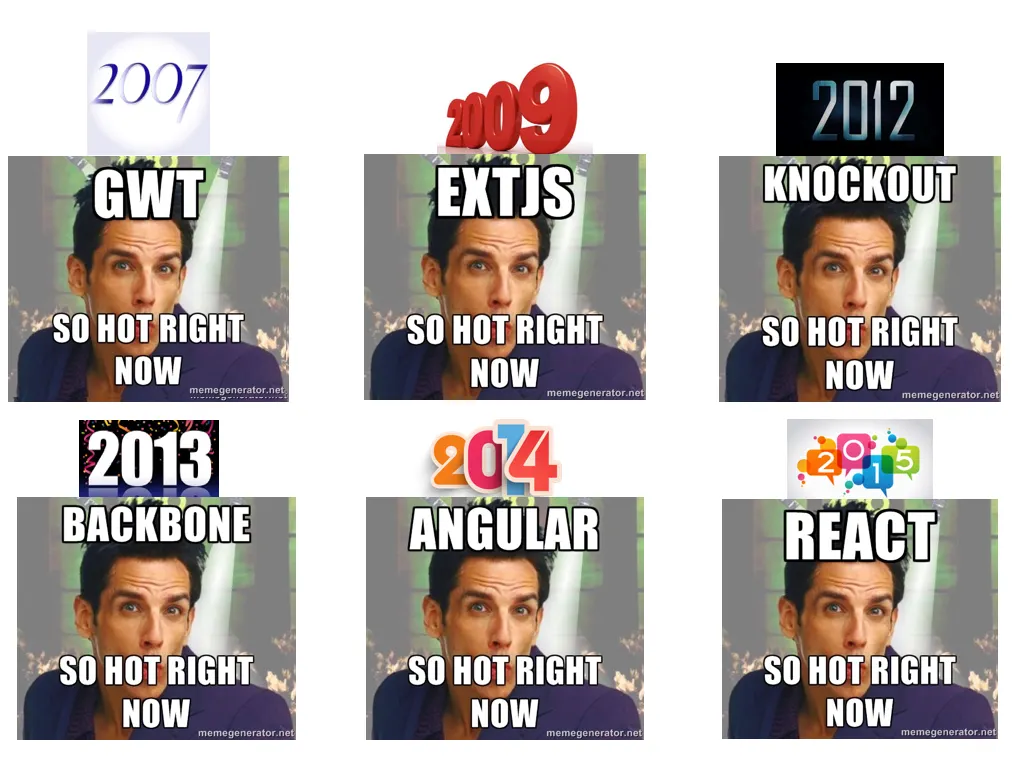
Learning a new programming language, framework, or skill is a daunting task. As a web developer trying to keep up with the field, it can feel overwhelming. Technologies seem to come and go every few months — there's always a new up-and-coming framework around the corner.
If you're coming from a strict HTML/CSS background like me, taking the next step into the JavaScript world can be intimidating. I lived in a jQuery comfort zone for years. As a young and naive developer, I thought jQuery was all I'd ever need — boy was I wrong. I'd see these neat frameworks and what they could do, but I never felt skilled enough to use them. I'd take a brief look at some examples, get immediately overwhelmed, and go back to what I knew best.
That all changed when I started a new job and had to get serious about JavaScript frameworks. I was creating and maintaining AngularJS applications for a popular custom home builder — and I had no idea what I was doing. I had no choice but to invest time outside of work and actually learn the framework. That's when I discovered a better way to approach learning.
My Problem With "Hello World" Tutorials#
I've spent many hours watching tutorial videos on LinkedIn Learning and other platforms. They're great resources, but they all share one thing in common — they start with "Hello World."
Don't get me wrong. "Hello World" is a perfectly fine entry point when you're picking up a new programming language for the very first time. But if you've been developing for a few years, those generic tutorials won't hold your attention for long. Learning should be exciting, not rehearsed and dull.
Find Your Own "Hello World" Project#
The best way to learn a new framework is to skip the generic examples and build something you actually care about.
I use a "Periodic Table of Elements" app as my go-to tutorial project for every new framework I learn. It's consistent enough to compare implementations across frameworks, but interesting enough to keep me engaged. Let me walk you through how to apply this approach yourself.
Step 1: Pick a Topic You're Genuinely Interested In#
This is the most important step. Without a topic that actually interests you, you might as well close this tab and go find a Hello World tutorial.
A friend of mine was learning HTML and CSS and built everything around Jeeps — something he was already passionate about. That focus kept him motivated through the frustrating early stages. My wife, a rocket scientist friend, and I had just returned from the March for Science in Washington D.C. I love science, so it became my topic. For you, it could be sports stats, music, cooking, travel — anything you'd be excited to build around.
The topic itself doesn't matter. Your genuine interest in it does.
Step 2: Come Up With a Simple App Idea#
Once you have your topic, brainstorm a short list of app ideas. Don't worry about whether it's been done before — this project exists to help you learn, not to disrupt an industry. Here are some ideas I considered for my science theme:
- Periodic Table of Elements Application (the one I went with)
- Animated Planets and Moons of the Solar System
- "Your Weight on a Planet" Calculator
- Planet Weather App
Pick one and keep it simple. You can always build on it later.
Step 3: Build It and Solve Real Problems#
You have your topic, you have your idea — now it's time to build. You can still follow along with tutorials, but you'll start encountering real-world problems that generic examples never cover. Things like fetching and processing data from an API, managing state, or structuring a component hierarchy. Those are the problems that actually teach you how a framework thinks.
Struggling through those moments is where the real learning happens.
The Payoff#
Taking this approach saved me hours when learning AngularJS. Not only did I pick up the framework faster than I would have grinding through tutorials, but I actually enjoyed the process — and I ended up with a unique portfolio piece along the way.
The best way to learn a new JavaScript framework isn't to follow a prescribed curriculum. It's to build something that means something to you.
Do you have a topic you're interested in? What's your app idea, and which framework are you trying to learn? Share it below — you might just help spark an idea for another developer.